

It will be a very different story for airports in the Middle East this year, but air connectivity across the region grew by 21% in 2025, according to ACI Asia-Pacific & Middle East.
Its newly released Air Connectivity Index for 2025 shows that air connectivity in the region was driven by the expanding reach of Gulf-based carriers.
With air connectivity across Asia-Pacific rising by 10% last year, ACI APAC & ME reports an average of 11% growth across the two regions.
APAC & ME claims that the growth reflects
APAC & ME claims that the growth reflects expanding international networks, stronger hub connectivity, and the continued recovery of city-pair connections, noting that as the regions enter the next phase of growth, the focus will be on ensuring that airport and airspace capacity, infrastructure, and the wider policy environment keep pace.
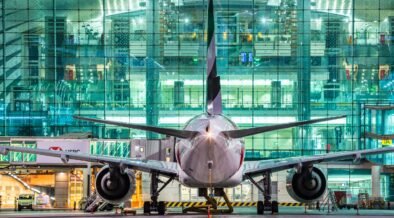
Dubai International Airport continued to rank top for air connectivity, followed by Shanghai Pudong and Incheon International Airport.
Guangzhou Baiyun International Airport ranked fourth, followed by Hamad, Singapore Changi, Beijing Capital, Bangkok Suvarnabhumi Tokyo Haneda and Hong Kong.
The three airports recording the strongest improvements
The three airports recording the strongest improvements in connectivity in 2025 were Shanghai Pudong (+32%), Kuala Lumpur (+30%), and Hong Kong (+28%).
ACI APAC & ME notes that 2026 has been a complex year marked by geopolitical instability and economic challenges
It says that despite economic shocks from the conflicts in Europe and the Middle East and changes in US trade policy, Asia-Pacific direct connectivity remained on the positive side, with modest growth of 0.5% in H1 2026 as compared to H1 2025.
The Middle East, by contrast, contracted sharply, down
However, the Middle East, by contrast, contracted sharply, down 23% as geopolitical conflict in the region forced airlines to cut schedules and reroute around affected airspace.
Stefano Baronci, director general of ACI Asia-Pacific & Middle East, said: “Despite the macroeconomic challenges, the Asia-Pacific region proved resilient in the first half of 2026, with passenger traffic increasing by approximately 1.6% year on year, though the outlook remains challenging.
“Boosted by growing international demand and a strong domestic traffic base, we still forecast growth in the medium and long-term.
As the operating environment evolves, the focus
“As the operating environment evolves, the focus is increasingly on how these efforts can support greater resilience and sustainable growth. This includes making better use of existing capacity, strengthening operational reliability, improving the passenger experience, and investing in new infrastructure and technology.
“ACI Asia-Pacific & Middle East recommends strengthening the policy and regulatory environment that enables connectivity growth, including the revision of existing air service agreements, continued easing of visa requirements, and reforms to enhance the slot allocation framework.”
Source: airport-world.com